

Aerial scene understanding
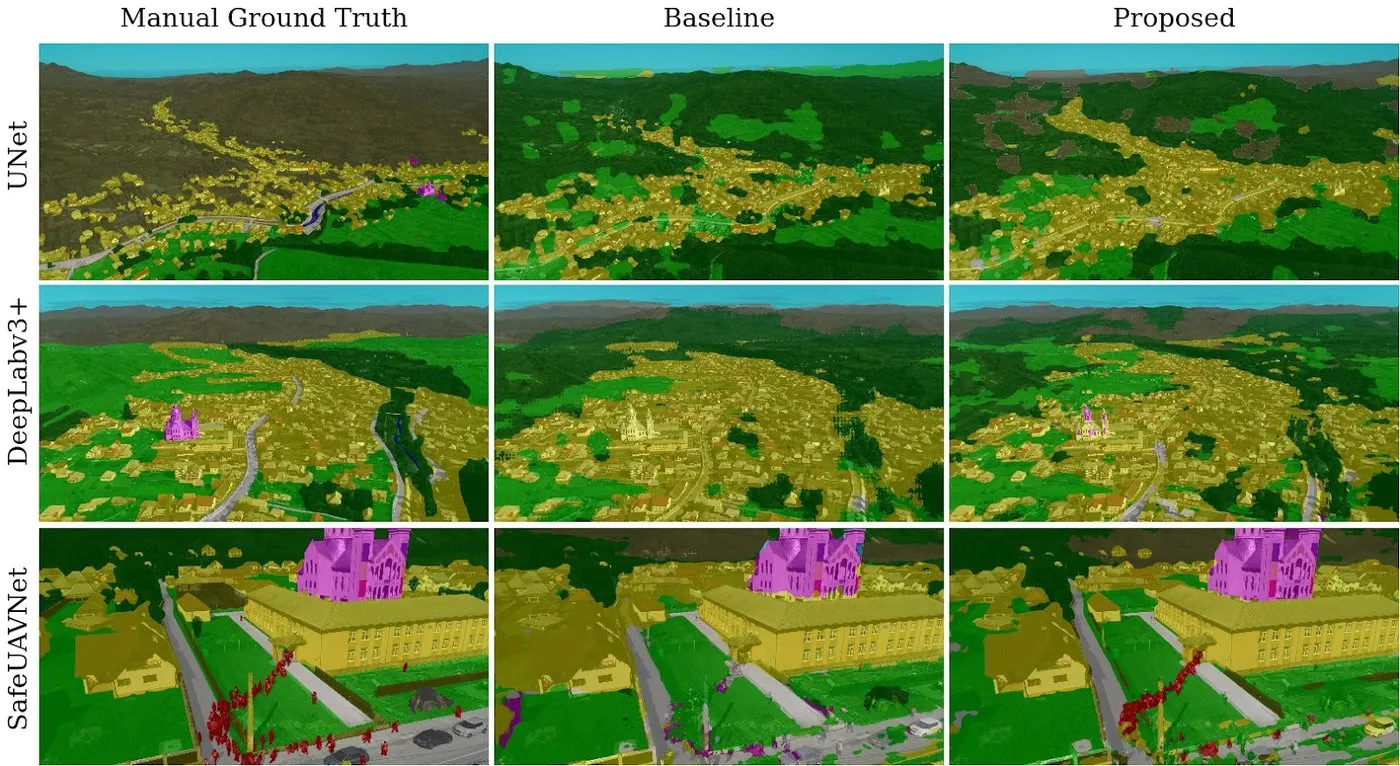
Segmentation, depth, geolocalization and safe-landing estimation from drone and satellite images, trained with as few labels as we can get away with.
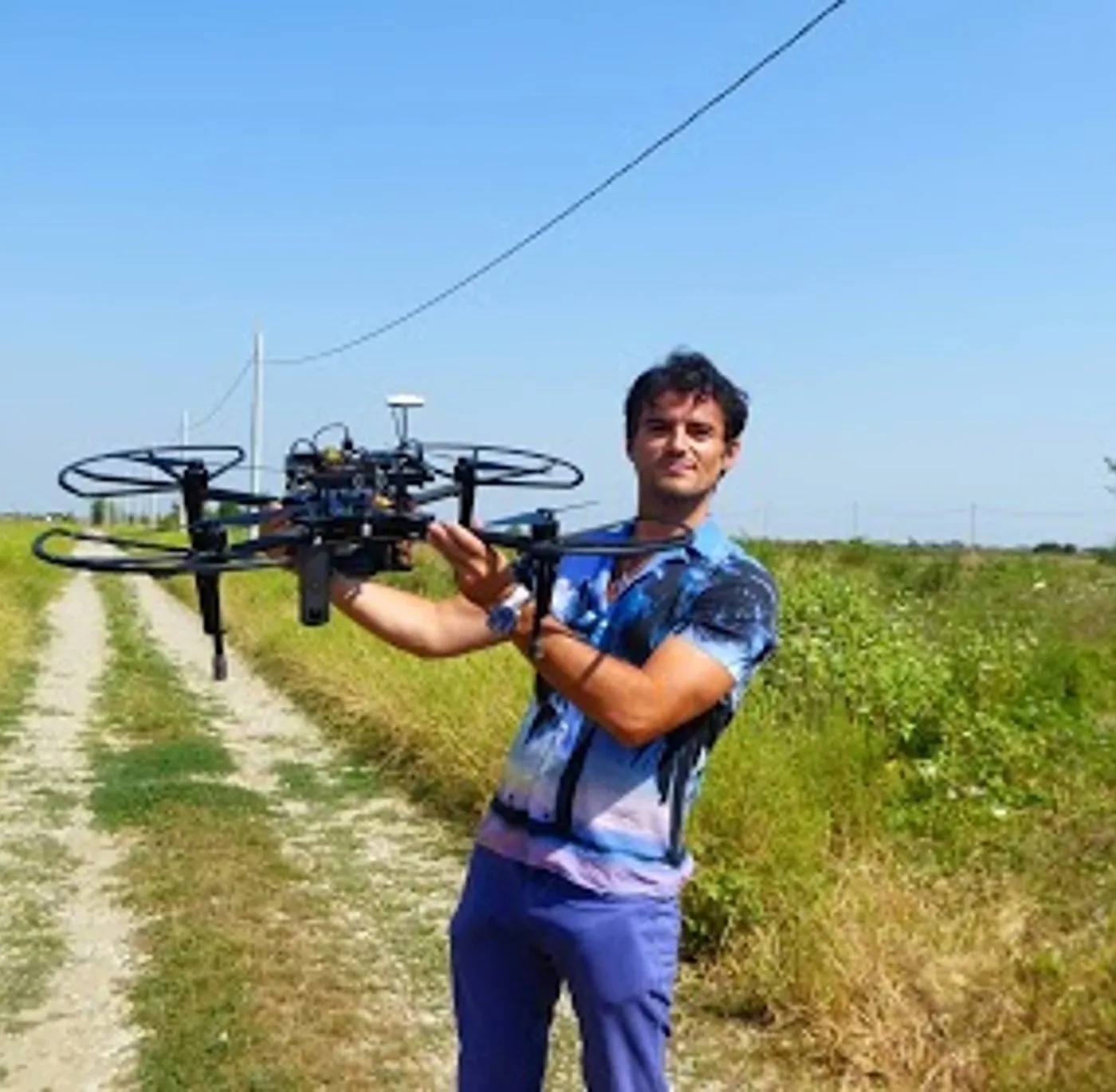
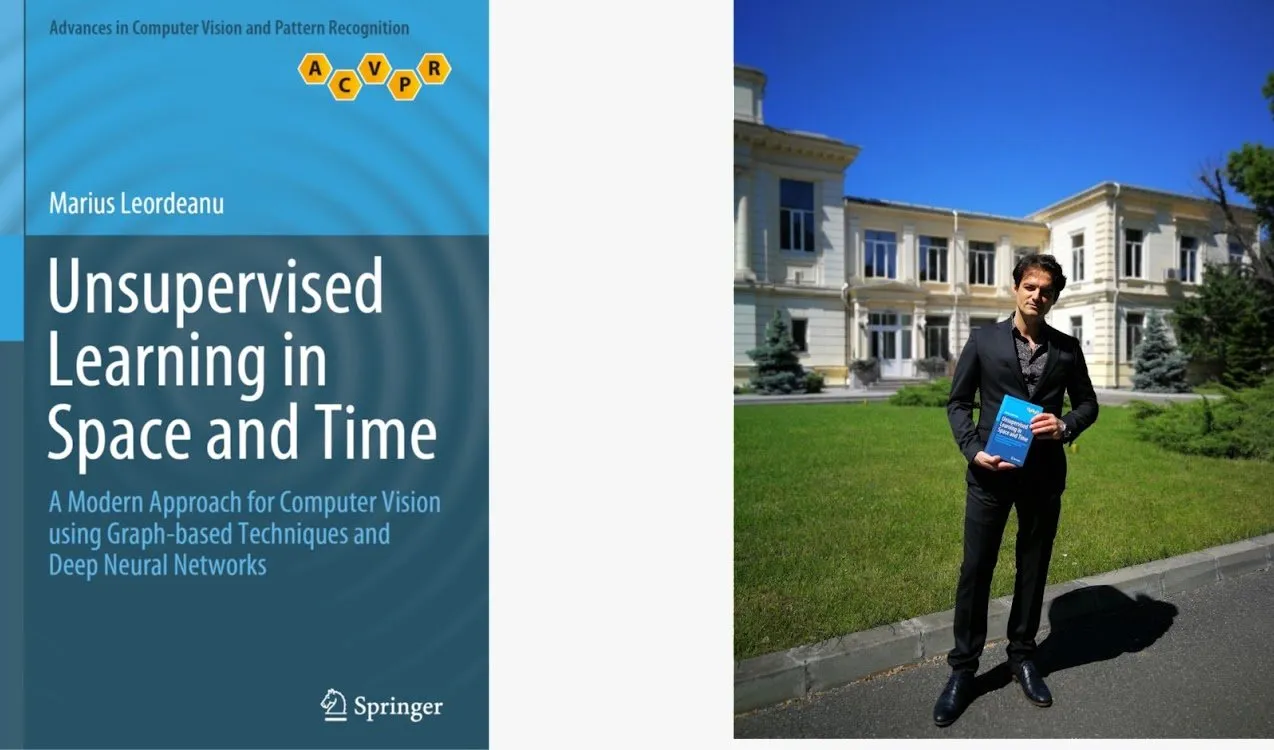
15 papersWe are a computer vision and machine learning group at University Politehnica of Bucharest and the Institute of Mathematics of the Romanian Academy, led by Marius Leordeanu. Most of our work is about learning from video and other spatio-temporal data with little or no human labelling. We apply it to aerial scene understanding, to drones that navigate and land on their own, to connecting video with language, and to real-time interaction between people and AI.


Our main funding since 2025. HRIA is a national AI hub coordinated by POLITEHNICA Bucharest, funded through the Smart Growth, Digitization and Financial Instruments Programme 2021–2027 (MySMIS 334906).

Horizon Europe network of excellence on sustainable AI (grant 101120237), which we are part of together with Bitdefender.
Segmentation, depth, geolocalization and safe-landing estimation from drone and satellite images, trained with as few labels as we can get away with.
15 papersMany networks, each predicting one view of a scene from another, that keep training on unlabelled video by agreeing with each other.
8 papersSmall, cheap drones that fly, navigate and land using a single camera.
6 papersReal-time, non-verbal interaction between people and AI, from reading body language to art installations that respond to a smile.
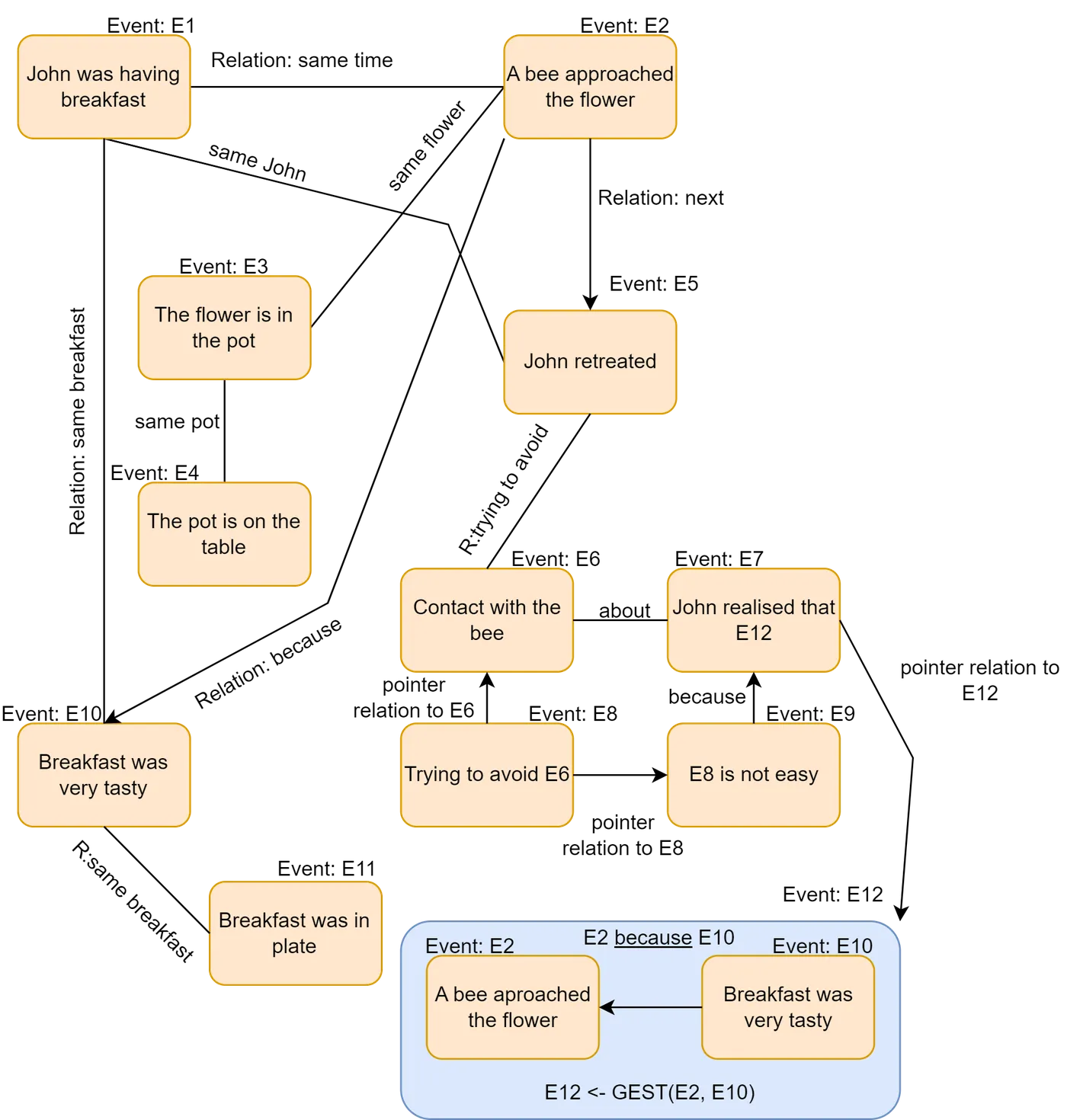
13 papersGraphs of Events in Space and Time (GEST) as a common representation for video and text, video generation from those graphs, and Romanian language models.
16 papersFinding, segmenting and tracking objects in video without labels, using spectral clustering, graph optimization and teacher-student training.
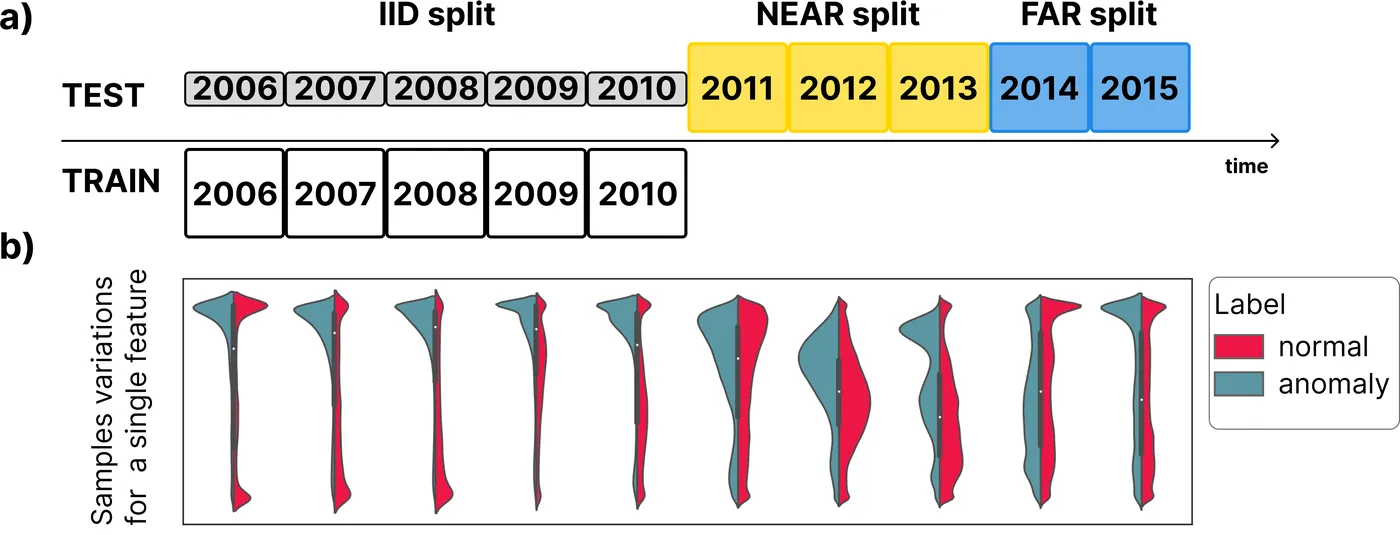
15 papersAnomaly and novelty detection under distribution shift, continual learning, explainability and test-time augmentation.
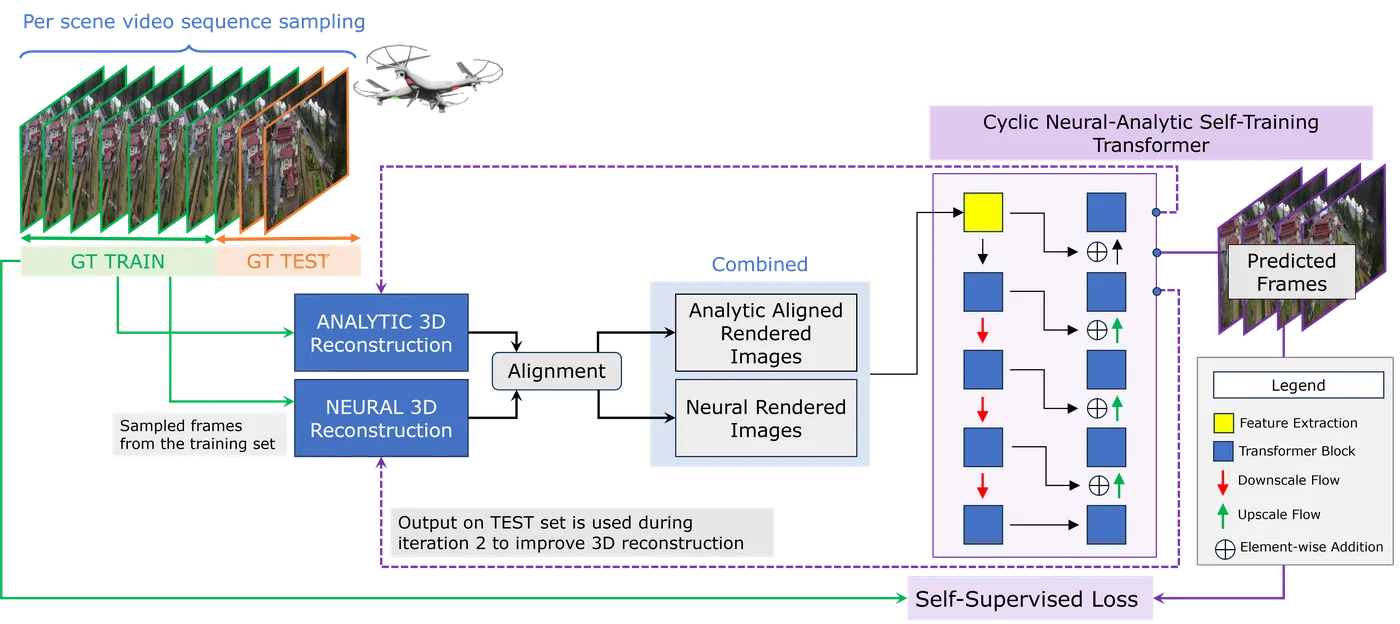
18 papersCombining analytic geometry with neural rendering for novel views, multi-view reconstruction and synthetic 3D data.
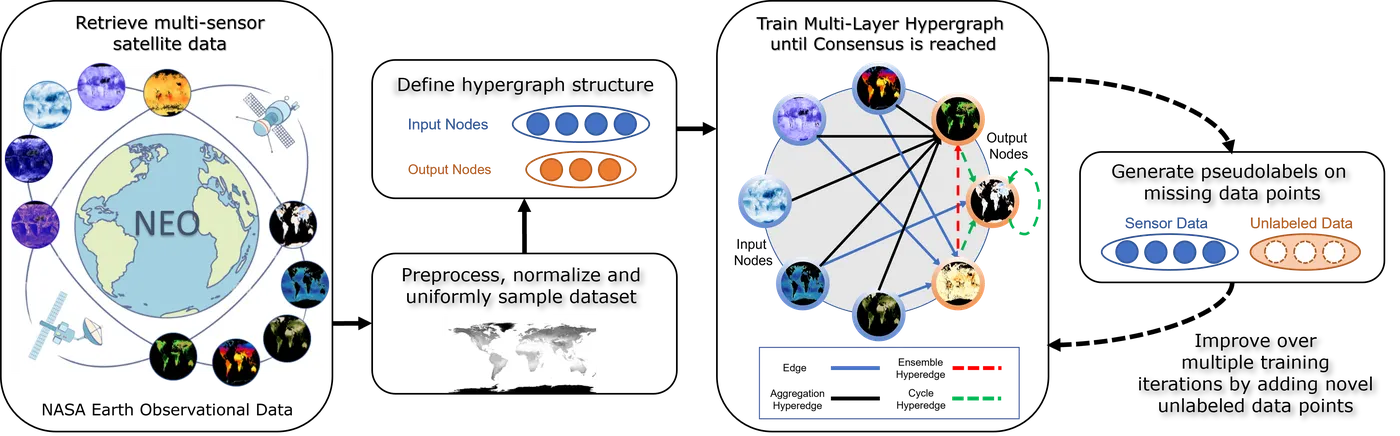
4 papersHypergraphs over NASA Earth-observation layers that predict one climate variable from the others.
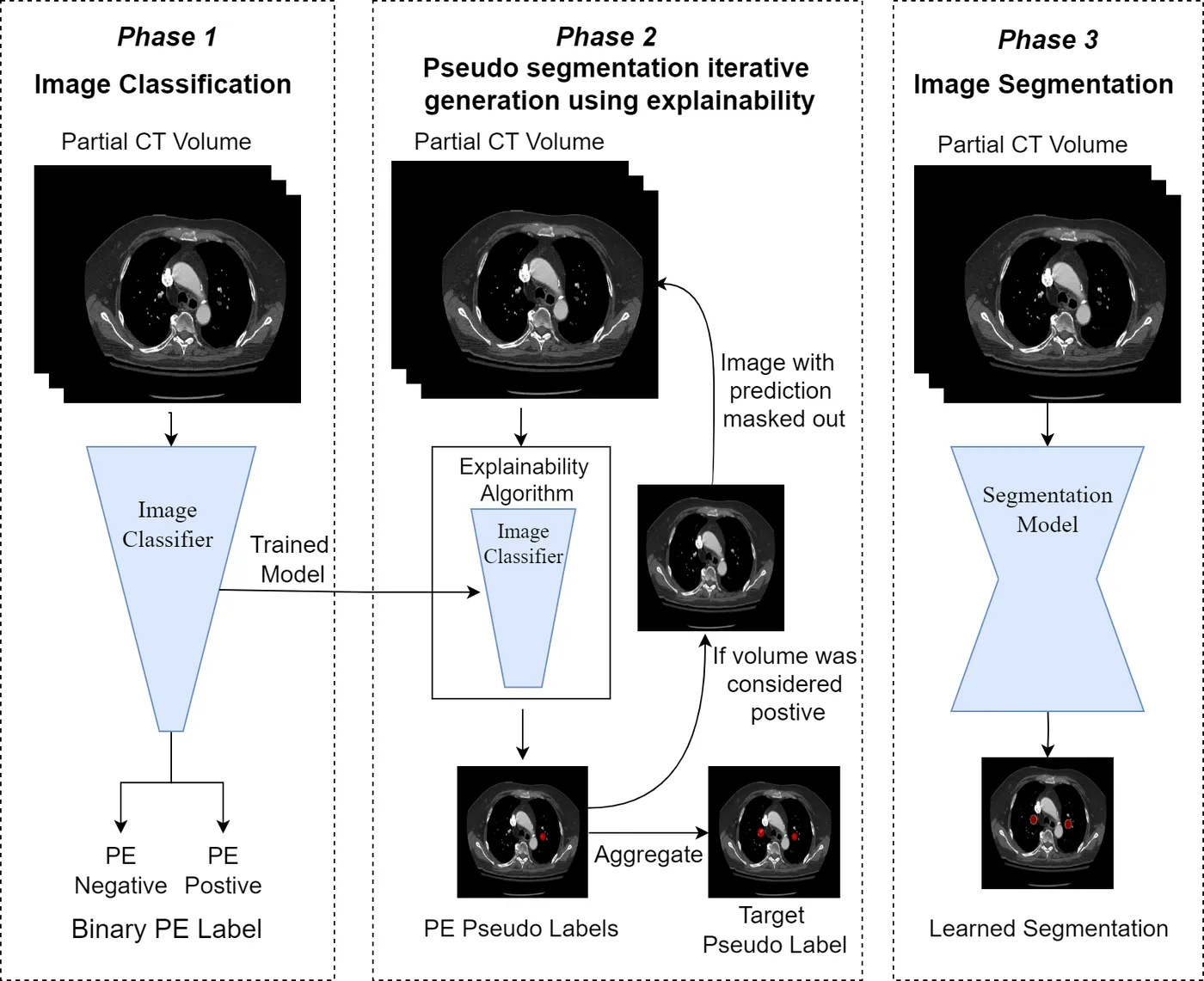
1 paperPulmonary embolism detection and weakly supervised segmentation in CT, vital signs from video, and 3D super-resolution.
5 papersProceedings of the European Conference on Computer Vision (ECCV), 2026
Authoring a multi-actor scenario for a living 3D world, where every action changes its state, and each action’s validity depends on the state accumulated before it, demands the freedom of storytelling and the rigor of simulation at once. We author such scenarios with LLM agents, as Graphs of Events in Space and Time (GESTs) that a simulation engine executes deterministically into narrative videos with per-frame spatial, temporal, and semantic ground truth. A staged pipeline driving a flagship LLM, the standard design in video generation, failed outright: the model violates rules stated verbatim in its prompt, and cannot track the dynamic world state. We answer with a constraint-enforcing tool layer: our Director and Scene Builder agents explore the world’s capabilities page by page and build every scene through operations checked against simulator state, so every specification they emit is valid by construction. Because we generate each seed text from an existing scenario graph, we can measure reconstruction: the agent authors its own graph from the text alone, yet matches the original at 0.83 F1 on its events, each action with its participants (0.55 for a random scenario of the same kind), and 0.77 on their ordering (0.43 random). End to end: the standard staged pipeline produced 0 executable specifications in 50 attempts; our agents, driving a budget model, execute 20 of 25 (80%), and are, to our knowledge, the first to exercise the full expressive capacity of GEST.
Proceedings of the International Conference on Learning Representations (ICLR), 2026
Current methods for detecting spurious correlations rely on analyzing dataset statistics or error patterns, leaving many harmful shortcuts invisible when counterexamples are absent. We introduce BEE (Bridging Explainability and Embeddings), a framework that shifts the focus from model predictions to the weight space, and to the embedding geometry underlying decisions. By analyzing how fine-tuning perturbs pretrained representations, BEE uncovers spurious correlations that remain hidden from conventional evaluation pipelines. We use linear probing as a transparent diagnostic lens, revealing spurious features that not only persist after full fine-tuning but also transfer across diverse state-of-the-art models. Our experiments cover numerous datasets and domains: vision (Waterbirds, CelebA, ImageNet-1k), language (CivilComments, MIMIC-CXR medical notes), and multiple embedding families (CLIP, CLIP-DataComp.XL, mGTE, BLIP2, SigLIP2). BEE consistently exposes spurious correlations: from concepts that slash the ImageNet accuracy by up to 95%, to clinical shortcuts in MIMIC-CXR notes that induce dangerous false negatives. Together, these results position BEE as a general and principled tool for diagnosing spurious correlations in weight space, enabling principled dataset auditing and more trustworthy foundation models. The source code is publicly available at https://github.com/bit-ml/bee.
arXiv preprint, 2026
While Deep Learning has demonstrated impressive results in applications on various data types, it continues to lag behind tree-based methods when applied to tabular data, often referred to as the last “unconquered castle” for neural networks. We hypothesize that a significant advantage of tree-based methods lies in their intrinsic capability to model and exploit non-linear interactions induced by features with categorical characteristics. In contrast, neural-based methods exhibit biases toward uniform numerical processing of features and smooth solutions, making it challenging for them to effectively leverage such patterns. We address this performance gap by using statistical-based feature processing techniques to identify features that are strongly correlated with the target once discretized. We further mitigate the bias of deep models for overly-smooth solutions, a bias that does not align with the inherent properties of the data, using Learned Fourier. We show that our proposed feature preprocessing significantly boosts the performance of deep learning models and enables them to achieve a performance that closely matches or surpasses XGBoost on a comprehensive tabular data benchmark.
arXiv preprint, 2026
We present an efficient and robust method for 3D geometric reconstruction that is based solely on the camera-independent linear relationships among a given set of points, which are stable over time and robustly estimated using multiple point matches. We essentially learn, from correspondences between points across several frames, a linear geometric auto-regression matrix $\mathbf{W}$, which establishes how a point in 3D can be expressed as a linear combination of all the others. This matrix is constant and does not depend on the world coordinate system or the camera pose—it is an intrinsic property of the point set. We also show that the principal eigenvectors of $\mathbf{W}$, which all have eigenvalue $1$, provide a homogeneous representation of the 3D point configuration. The first version of our method takes advantage of noisy monocular depth maps in order to obtain, from multiple frames, a robust geometric auto-regression matrix $\mathbf{W}$ of linear relationships between the 3D points. Thus, we build on recent advances in deep learning, which now provide monocular depth estimation models that are fast but very often noisy. Our approach handles noise through robust linear estimation over several frames. The second version of our method does not need monocular depth estimation maps. It applies in cases of weak-perspective projection, when the linear combinations between the 3D points can be robustly estimated from their 2D projections in the image. Note that the camera projection matrix is never used in our derivations. Consequently, our method does not recover camera pose, but only 3D structure. This is a key difference between our method and the related literature on 3D geometric reconstruction.
Proceedings of the Asian Conference on Computer Vision (ACCV), 2026
Game engines hold what video models struggle to learn: a complete, explicit world state behind every frame. We turn one into a data instrument. GEST-Engine, our production-grade open-source system, deterministically executes Graphs of Events in Space and Time (GESTs), whether procedurally generated or derived from text, into videos of synchronized multi-actor scenarios, recording ground truth as it renders: 3D entity and camera state, pairwise spatial relations, event-to-frame mappings, instance segmentation, and long descriptions, at zero marginal annotation cost. With it we release GTASA, a 938-video sample of what the system can generate at arbitrary scale, carrying, to our knowledge, the densest spatial-relation coverage of any video dataset: a complete entity-pair relation graph at every frame, ~84x denser than the state of the art, frame-for-frame. We validate GTASA both qualitatively, through human evaluation of physical validity and semantic alignment where frontier neural generators, given the same prompts, largely fail, and quantitatively, with GTASA pretraining improving VideoLLaMA3 video captioning. Probing six frozen video encoders across 11 spatio-temporal tasks enabled by GTASA’s exact 3D ground truth, a previously untestable inter-entity relational probe of frozen video features, reveals that who-is-near-whom barely rises above chance for all of them. We release the engine, the corpus, and the benchmark, making this gap a measurable, trainable target.
Advances in Neural Information Processing Systems (NeurIPS), 2026
Can a dataset be recognized from the spurious correlations it induces during training? We argue that datasets leave dataset-specific traces in a model’s learned semantic correlation structure: incidental regularities that are predictive within a dataset, but not causal for the underlying task, can be internalized during training. We use this insight to study dataset-level membership inference, moving beyond existing methods that rely on behavioral or distributional evidence such as confidence scores, losses, margins, generated samples, or query responses. We introduce a white-box semantic fingerprinting approach based on semantic correlation descriptors (SCDs), which capture the semantic correlation structure learned by a model and make it comparable across dataset mixtures. In a controlled leave-one-dataset-out diagnostic, SCDs recover dataset-specific changes and perfectly separate matching from non-matching dataset pairs. We then propose a practical SCD-based membership score that tests whether a target dataset is part of a model’s training mixture using only the model’s SCD and the target dataset’s standalone SCD, without requiring leave-one-dataset-out models. Across three diverse experimental settings, with dataset groups for natural language inference, emotion classification, and medical text classification, we test both the advantages and limitations of SCD-based membership inference with different degrees of semantic separation and keyword support between dataset splits. On average, the classifier based on this score achieves the highest performance and the lowest std, outperforming black-box baselines RMIA, Attack-P, and LiRA, as well as the white-box SIF baseline. These results show that dataset membership can be traced through internal semantic correlations, with the largest relative gain exceeding 60% in ROC-AUC when dataset groups expose distinct semantic particularities.
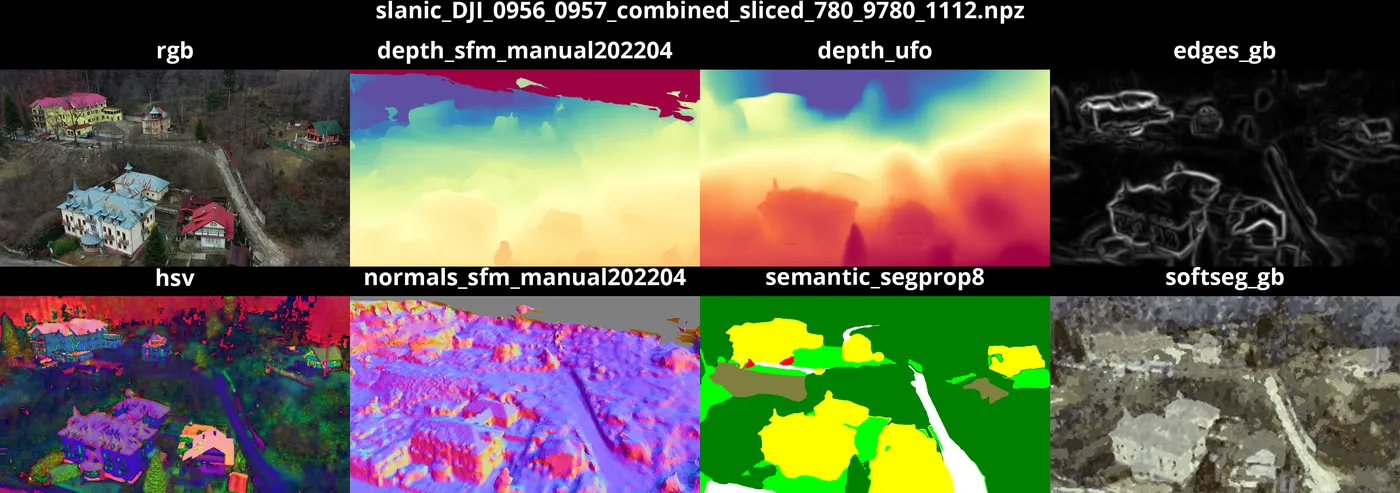
Drone videos with human-annotated semantic segmentation, SfM depth and surface normals, recorded over several scenes in Romania and Norway.
RGB video, 8-class semantics, SfM depth, Surface normals, Optical flow, Edges
Dronescapes with extra modalities produced by pretrained expert models through the Video Representations Extractor (VRE).
RGB video, Expert-generated modalities, Semantics, Depth, Normals
Monthly global NASA Earth Observations layers at 540×1080, prepared for multi-task learning, with loaders, viewer notebooks and train/test splits.
AOD, Chlorophyll, Cloud fraction, NDVI, Temperature, + more